

What Are Tears Made Of?
Tears are not simply salty water. Healthy tears are made of three interacting layers—mucin, aqueous fluid, and oil—that work together to protect the surface of the eye and keep vision clear.
When the quantity or quality of these layers is disrupted, symptoms of dry eye disease can develop.
Aren’t Tears Just Salty Water?
Many people assume tears are just salty water, but the truth is much more interesting. The tear film is a complex biological system that protects and lubricates the surface of the eye.
Before discussing treatments for dry eye, it helps to understand how normal tears work.
The Three Types of Tears
Reflex Tears
Reflex tears occur when something irritates the eye—dust, smoke, cutting onions, or a scratch on the eye. These tears are produced by the lacrimal glands and are mostly salt water. Their primary role is to wash irritants away.
Emotional Tears
Emotional tears occur when we experience strong emotions such as sadness or stress. Like reflex tears, they originate from the lacrimal glands, but they also contain neuroactive substances associated with emotional processing in the brain.
Basal Tears
The tears most important for eye comfort are basal tears. These are produced continuously and coat the surface of the eye throughout the day.
They originate from several microscopic glands located on the eye surface and within the eyelids. These glands can be affected by many medical conditions including arthritis, autoimmune disease, hormonal changes, and aging.
The Three Layers of Healthy Tears
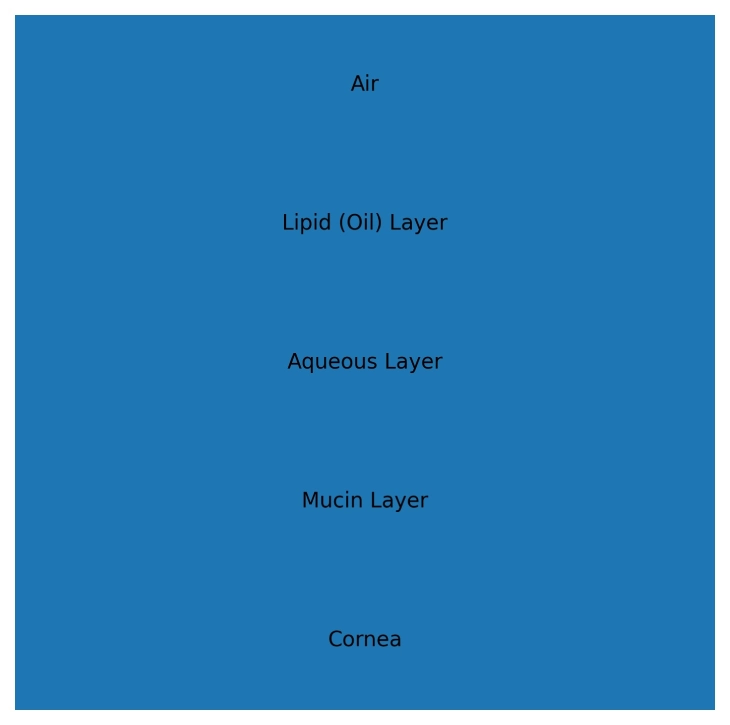
Mucin Layer
The mucin layer sits directly on the surface of the cornea. It is produced by specialized cells called goblet cells and helps tears spread smoothly across the eye.
Aqueous Layer
The middle layer is mostly water and is produced by the lacrimal glands. It provides moisture and nutrients to the eye.
Oil Layer
The outermost layer is made of oil called meibum, produced by the meibomian glands located along the eyelid margins. This oil layer slows evaporation of tears.
Visualizing the Tear Film
One helpful way to imagine the tear film is to think about Italian salad dressing.
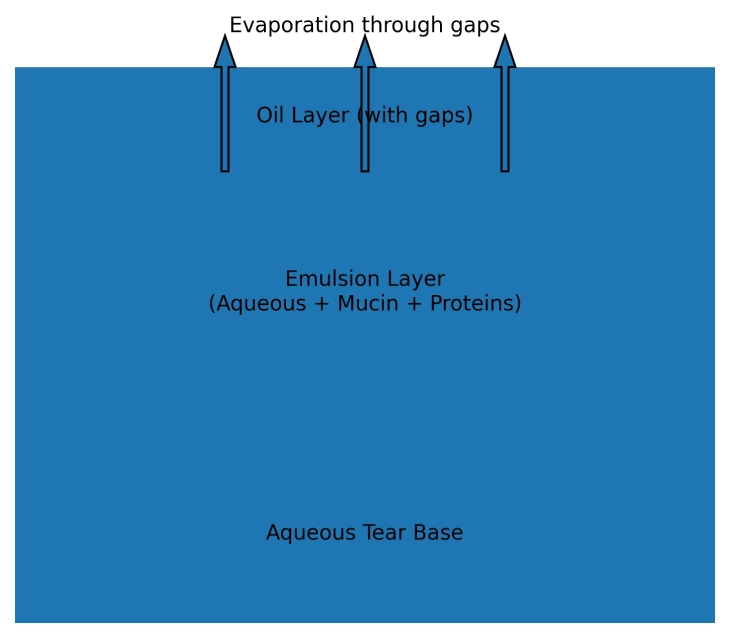
When you shake the bottle, oil and vinegar mix together into an emulsion. The tear film behaves in a somewhat similar way: the mucin and aqueous components form a mixture while the oil layer floats on the surface and helps stabilize the film.
However, unlike salad dressing, the tear film is a highly regulated biological system containing proteins, electrolytes, antibodies, and other molecules that help protect the eye.
When the Tear Film Stops Working
Dry eye disease can occur for two primary reasons:
- The eye does not produce enough tears.
- Tears are produced in normal quantities but the quality of the tear film is poor, so they do not function properly.
In many patients the oil layer becomes irregular or develops small gaps. When this happens, the aqueous portion of tears can evaporate too quickly.
This leads to symptoms such as burning or irritation, fluctuating or blurry vision, tearing, and the sensation that something is in the eye.
Coming Next
In the next post we’ll discuss how doctors diagnose dry eye disease and how these tests help identify the specific type of dry eye present.